
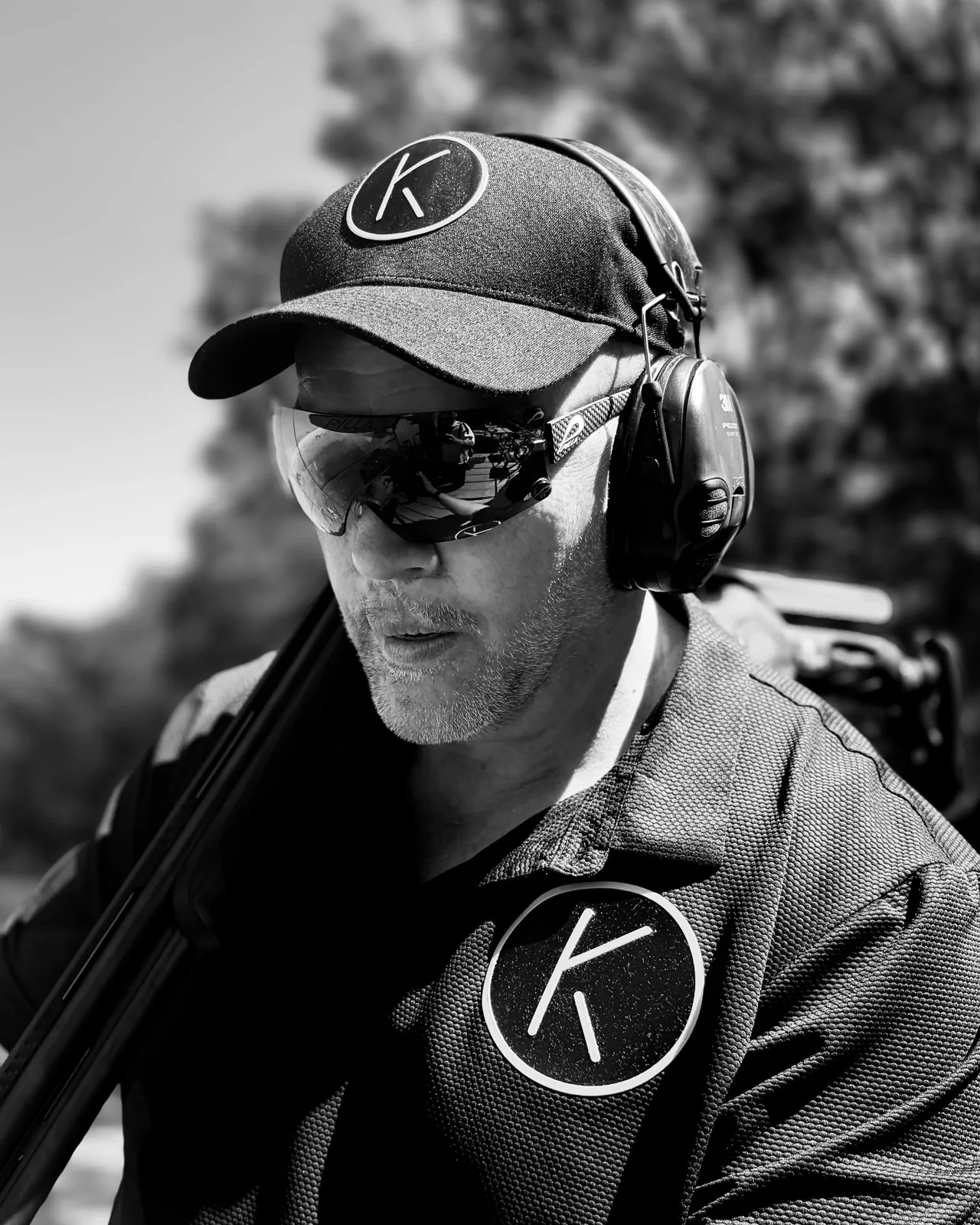
I came to clay target shooting late, and I came to it hard.
Less than four years ago, I had never stood in a cage and called for a target. Then a friend put a shotgun in my hands at a Compak Sporting layout; a clay came out of the trees, I missed it by a mile, and I was gone. Within a season I was shooting every weekend. Within a few more I was shooting the Compak SA circuit seriously, travelling to provincial shoots, and eventually qualifying to represent Compak South Africa at the 2026 22nd Compak Sporting World Championships in Italy. If you have ever caught the bug, you know that there is no such thing as a casual clay shooter. Only people who haven’t found it yet and people who can’t stop.
What I could not get over, from the first competition I entered, was the paper.
Here was a sport with expensive guns, engineered cartridges, traps that throw targets to the centimetre, referees who can call a chip at forty metres, and the whole thing was being recorded with a pen on a card clipped to a board. At a regional Compak SA shoot in my second season, I watched a squad argue for ten minutes about whether a second-barrel kill had been marked on the right line. Nobody was cheating. The card was just wrong, and by the time anyone noticed, the round was over, and the memory had gone with it. That night I went home with a score I did not fully trust, no idea which stands I had lost my birds on, and nothing to show a coach except a number.
I found that unacceptable, not as a shooter, but as someone who has spent a working life in businesses that live and die on accurate data. Every serious sport has moved its scoring into the shooter’s pocket. Golf did it. Running did it. Cycling did it years ago. Clay shooting, one of the most measurable sports on earth, where every target is a clean one or a zero, was still written on paper and added up by hand.
So I built the thing I wanted to exist.
KillCount.AI started as a scorekeeper. Stand by stand, clay by clay, singles, doubles and sims, tap the kill or the loss and the card takes care of itself. No adding up, no arguments, no lost sheets. But the moment the data was clean, it started talking. It told me my second bird on a pair was where my average went to die. It told me which stand on Range 1 had beaten me three visits in a row. It told me my kill streak, my hit rate against a rival, my best round, my worst habit. That is where KillCoach.AI came from: the realisation that the scorecard, once it is honest, is the best coach most of us will ever have.
Then the clubs asked for the same thing. Running a shoot on paper is even worse than shooting one on paper. Entries, squads, results, membership, prize-giving, all done on spreadsheets and WhatsApp at five o’clock on a Friday, Saturday or Sunday afternoon. ProShot Club Manager and ProShot Org Manager exist because I have sat on that side of the table too, helping run clay shooting events, and I know exactly how much of a club secretary’s weekend disappears into admin that a phone or tablet should be doing.
Everything we build at ProShot Systems comes from the same place: I am a competitor first. I shoot the layouts we score. I stand in the squads that use the app. When a card is wrong, I am the one who is annoyed, and when a stat finally explains a miss I have been making for a year, I am the one who goes back to the range on Tuesday to fix it.
The name says what we count. In our sport a hit has always been a kill, a miss has always been a loss, and a clean round has always been a straight. We are not here to change the language of the sport. We are here to make sure it is recorded properly, understood properly, and shared with the people who will appreciate it, which is usually the mate who beat you by one.
Whether you shoot the rounds, coach the shooters or run the club, we have already sat where you are sitting.
Hardus van Pletsen
Founder, ProShot Systems · Compak SA competitor